As an American, you probably think that you know a lot about the Civil War, but what if we told you that you probably don’t? Yes – a lot of what we’re taught about this historic event in school has been shaped by textbooks and passed-down stories, some of which are accurate, but many of which are not. Perhaps you’ve heard about some of these misconceptions, so let’s test your Civil War knowledge with the following myths that keep getting taught as the truth.
The War Wasn’t Really About Slavery

You’ve no doubt heard the stubborn idea that the Civil War was just about states’ rights or tariffs. Sure, those topics existed in the background, but more notably, the Confederacy made it clear in their own documents and speeches that preserving slavery was the main priority.
The South Fought a Noble Cause

If you do your research, you’ll know that romanticizing the Confederacy as a group of freedom-loving underdogs is quite the unpleasant lie. Frankly, that narrative downplays the fact that they were fighting to uphold a system based on human bondage. The idea of a “lost cause” paints Confederate leaders as tragic heroes when, in reality, they were defending one of the most brutal forms of oppression in American history.
Abraham Lincoln Didn’t Really Care About Ending Slavery

While it’s true that Lincoln wasn’t always a radical abolitionist, claiming that he didn’t care about slavery isn’t fair. Over time, his views evolved significantly, and by the time he issued the Emancipation Proclamation, he had come to see slavery as morally and politically unacceptable. He also pushed hard for the 13th Amendment, which ended slavery for good.
The Emancipation Proclamation Freed All the Slaves

Contrary to popular belief, the Emancipation Proclamation did not actually end slavery in the U.S. overnight. Actually, it only applied to Confederate-held areas where the Union had no control.
Because of this, enslaved people in Union border states, such as Kentucky and Maryland, weren’t actually freed by it. Of course, it was an important move symbolically and strategically, but real, widespread freedom came later.
All Southerners Supported the Confederacy

Another Civil War lie that still gets taught as fact was that just about everyone in the South was on board with secession. Nope – large numbers of poor white Southerners resented being drafted into a war they didn’t believe in.
The North Was Always Morally Superior

In a similar vein to the last point, it’s a common misconception that the North of the U.S. was morally superior to the South. OK, they did fight against slavery, but it’s misleading to think everyone there supported equality. At the end of the day, racism was alive and well on both sides of the Mason-Dixon line.
Slavery Was Dying Out Anyway

It’s pretty outrageous how we’re often taught that slavery was on its way out during the Civil War, so it would’ve ended on its own. That’s nonsense; the Southern economy was still deeply tied to slavery, and plantation owners had no intention of giving it up. More still, cotton exports were booming, and new territories were being eyed for expansion, so this argument has no legs to stand on.
Confederate Soldiers Weren’t Fighting for Slavery

It’s a harsh truth of U.S. history that Confederate soldiers were actively fighting for slavery, but this fact is often whitewashed. Our schools might claim that Confederate soldiers were just defending their homes, rather than slavery. If you don’t believe that this is fabricated, check out the speeches of Confederate leaders, and you’ll see that they made it clear that slavery was at the heart of their cause.
Black Soldiers Didn’t Really Fight

We’re not sure why this misinformation spread around the country, but people sometimes claim that black Americans didn’t actually fight in the Civil War. On the contrary, they served in large numbers, especially after 1863. In fact, approximately 180,000 African American men joined the Union Army and Navy!
Reconstruction Was a Disaster Caused by the North

Yet again, finger-pointing is the root of this false “fact.” After the war, the period known as Reconstruction is often blamed for being a mess imposed by the North. In reality, though, many of the problems came from Southern resistance to change. For instance, white supremacist groups like the Ku Klux Klan used violence and terror to fight against newly gained Black rights, which is pretty messed up.
Robert E. Lee Was a Reluctant Hero

Bizarrely, Robert E. Lee is often portrayed in books and movies as a tortured soul who only joined the Confederacy out of loyalty to Virginia. The truth? He actively owned slaves and believed strongly in white supremacy, quite literally leading armies fighting to preserve slavery.
The Civil War Was the Bloodiest War in U.S. History Because of Modern Weapons

We’d be surprised if you haven’t heard someone claim that the Civil War was America’s bloodiest war of all time, all because of newer weapons, such as rifled muskets.
It is actually true that this war was the bloodiest, but weaponry was only part of the picture. Other contributing factors included the war’s poor tactics and bad leadership, not to mention a refusal to adapt to changing battlefield conditions.
Ulysses S. Grant Was a Drunken Butcher

Another Civil War lie that still gets taught as fact is that Ulysses S. Grant was a “drunken butcher.” Actually, this was just a product of how Grant’s reputation took a hit from propaganda. Truth be told, he was a smart, determined leader who understood how to wear down the Confederacy’s resources. Obviously, he wasn’t perfect, but he was far from incompetent.
The Civil War Ended at Appomattox

Appomattox is often presented as the neat ending point of the war, but fighting continued elsewhere for weeks. More specifically, Confederate forces in places like Texas and Alabama didn’t surrender right away, and a lot of soldiers didn’t even know the war was over!
The Confederate Flag Is Just About Heritage
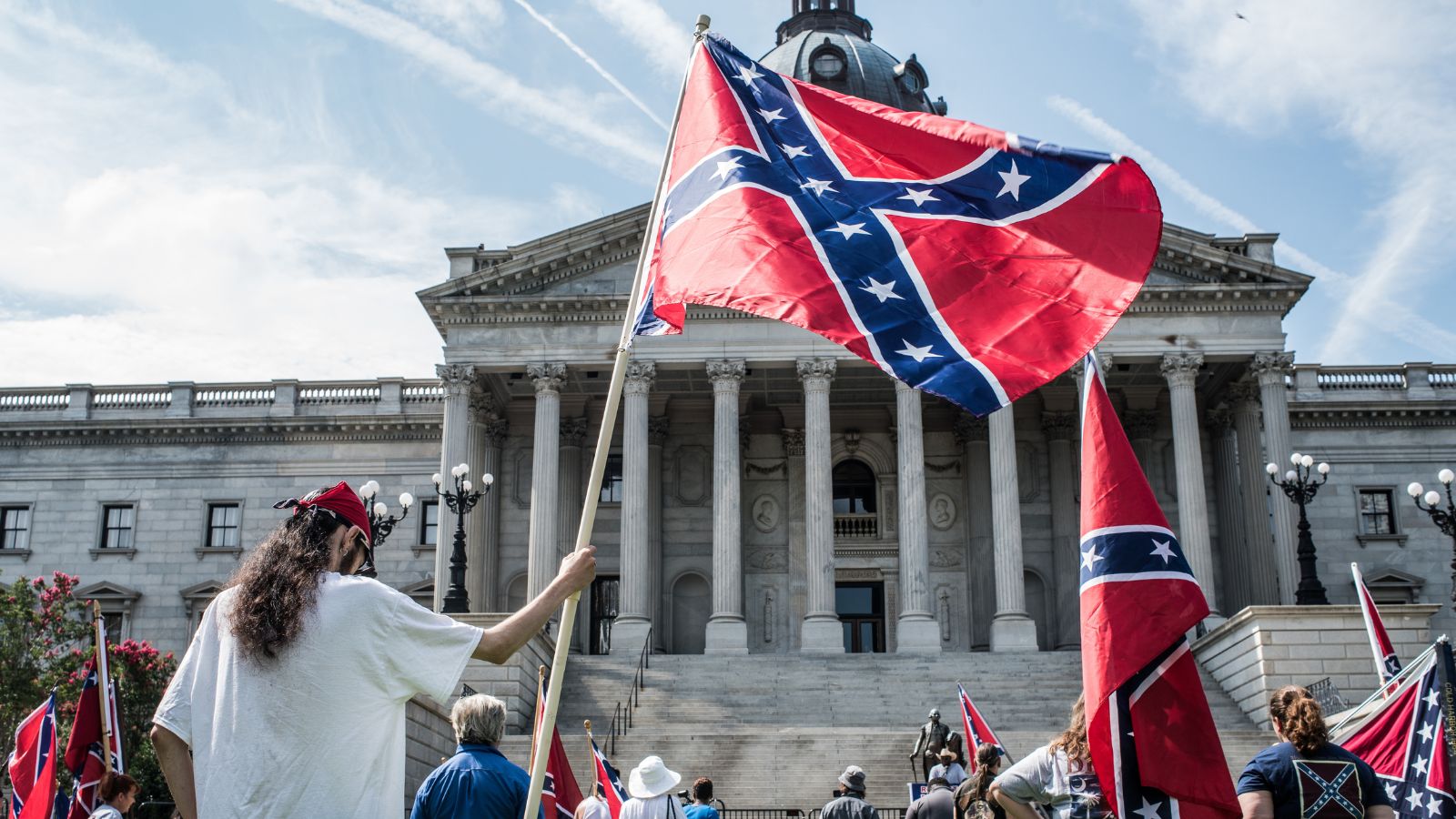
One of the most repeated myths is that the Confederate flag is just a symbol of pride and regional identity… like, come on! That flag was clearly a battle standard, and it came to be used as a tool of defiance during the Civil Rights Movement. Its use has always been tangled up with racism and resistance to equality, so we’d advise ignoring anyone who defends themselves with this claim.
Lincoln Freed the Slaves Because He Had To

To add to the many myths about Lincoln, there’s an idea that he only issued the Emancipation Proclamation because it was a military strategy, rather than a moral one. As we mentioned earlier, he’d already been moving in that direction before the proclamation, so it most definitely was not just a cold political move.
Slavery Ended Cleanly After the War

Last but not least, Americans often assume that once slavery was officially ended, that was the end of the story. If only it had been that simple.
In reality, systems of oppression quickly morphed into new forms, including sharecropping, Black Codes, convict leasing, and Jim Crow laws. Unfortunately, these kept Black Americans trapped in cycles of poverty and control for far longer than most people realize, and as a result, the legal end of slavery didn’t bring freedom overnight.
POPULAR POSTS
16 Countries Where American Tourists Aren’t Exactly Welcome
20 High-Paying Careers That Desperately Need Workers – But Nobody Wants to Do Them
18 Useless Features on Cars That Jack Up the Price for No Reason
Parts of this article were developed using AI assistance.